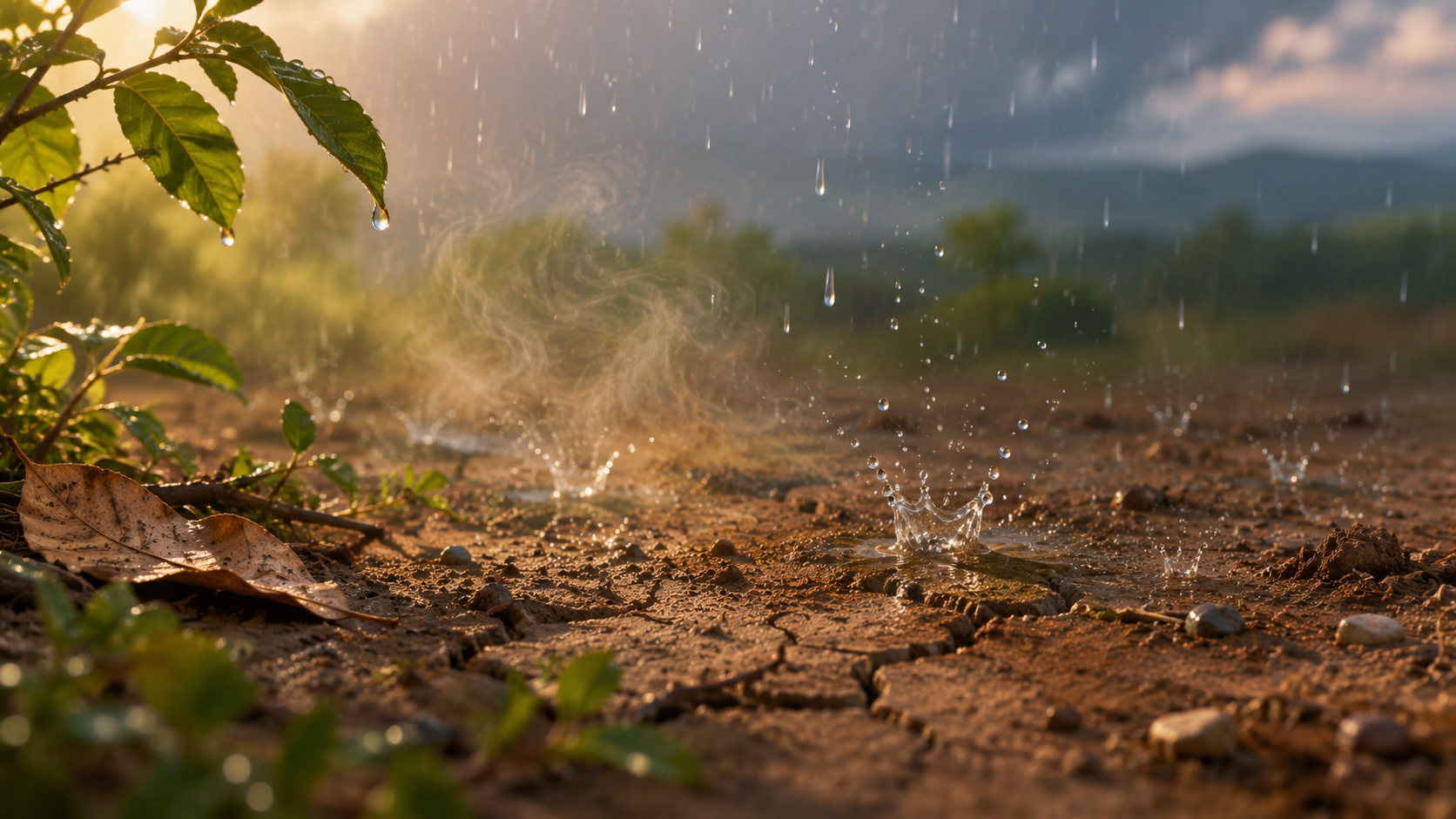
The first drops of rain on a dusty sidewalk can announce a storm before the pavement is even wet. That familiar earthy scent is often called petrichor. Although we associate it with water falling from the sky, much of the smell originates beneath our feet.
The soil has a scent of its own
One important ingredient is geosmin, a compound made by certain microorganisms, including bacteria that live in soil. It has a characteristic earthy odor. Plant oils and other substances that collect on the ground can contribute to the broader scent of rain, too. The mixture varies according to the surface and the surrounding environment.
A dry spell helps explain why the smell can seem particularly noticeable when a shower begins. Materials have accumulated on the ground, and the arriving water provides a way for some of those compounds to become airborne.
How a raindrop launches an invisible spray
Imagine a drop landing on porous soil. As the water spreads across the surface, it can trap tiny pockets of air. Those bubbles rise through the water and burst, ejecting very small droplets into the air. These suspended droplets are aerosols, and they can carry substances from the soil along with them.
Researchers at MIT used high speed imaging to observe this process. Light and moderate rainfall on suitable surfaces can be particularly effective at producing the aerosols. Wind can transport the released compounds, which is one reason a person may smell rain before the first drops reach them.
Is every rainstorm going to smell the same?
Not necessarily. A shower over a dry garden, a downpour over a city street and rain over already saturated ground interact with different surfaces. The mixture of compounds released and the way they travel differ. Rainwater does not need to contain a special perfume for the result to be memorable.
Sources: Texas A&M University, Why You Can Smell Rain; New York Botanical Garden, the chemistry of petrichor.
AI generated editorial illustration.