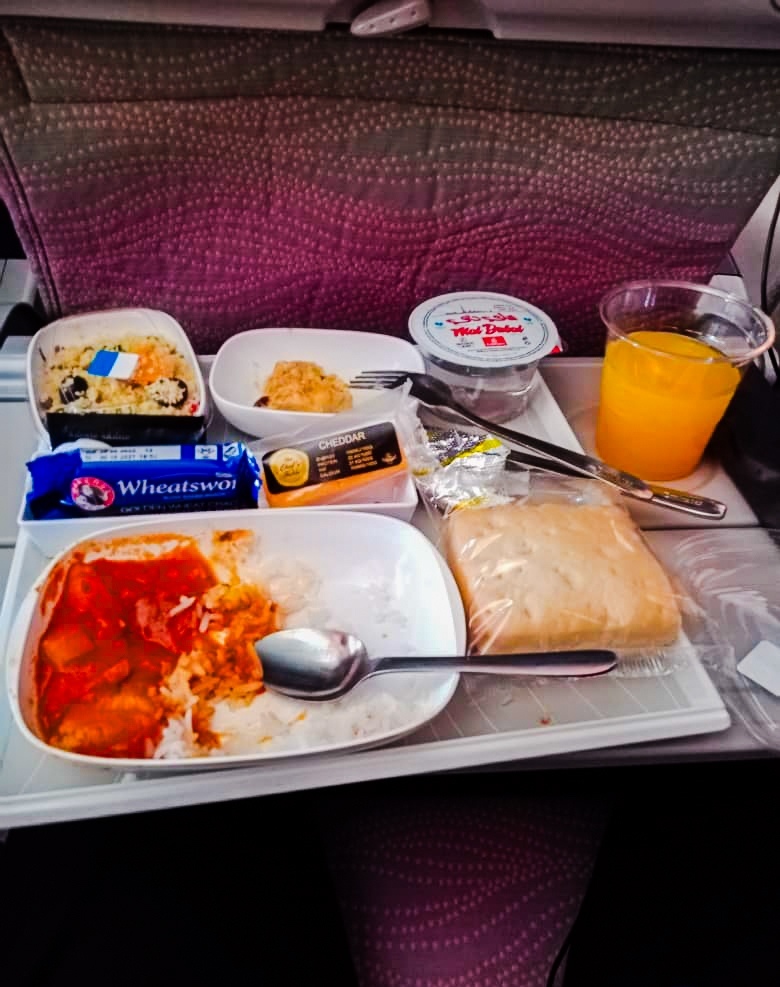
Tomato juice may sound unappealing at breakfast on the ground, yet suddenly seem appealing at cruising altitude. The food itself is not the only thing that has changed. The aircraft cabin changes several conditions involved in the experience of flavor.
Flavor is more than taste
Your tongue detects basic tastes such as sweet, salty, sour, bitter and umami. Much of what we call flavor, however, comes from aroma. When you chew and swallow, volatile molecules can travel from the mouth into the nasal cavity. Your brain combines these signals into a unified experience.
That is why a familiar meal can seem almost flavorless when your nose is congested, even if you can still detect its sweetness or saltiness.
The cabin changes the sensory environment
An aircraft cabin is pressurized, but its pressure is usually lower than the pressure at sea level. Cabin air is also often dry. Both conditions can affect the way we experience odors and tastes.
Researchers at the Fraunhofer Institute for Building Physics used a simulated aircraft cabin to study food and drink under different flight conditions. Unlike a restaurant tasting, this setting allowed the researchers to vary features of the cabin environment.
Even the noise matters
A 2015 experiment published in the Journal of Experimental Psychology: Human Perception and Performance exposed 48 participants to sounds resembling aircraft cabin noise while they sampled solutions representing basic tastes. In the noisy condition, participants reported reduced sweetness and enhanced umami.
The finding does not mean that every food becomes more savory in flight, but it shows that sound can affect taste perception. Eating is an experience that involves more of our senses than we usually realize.
Why airlines approach menus differently
A recipe developed in a kitchen may need adjustments for service in an aircraft. Ingredients that deliver distinctive aromas or savory flavors may behave differently from delicate dishes. Temperature, preparation and reheating also matter, so differences between a restaurant meal and an airline meal cannot all be attributed to altitude.
The next time you eat on a plane, notice which flavors stand out and which seem muted. You are experiencing a familiar food in a very unfamiliar sensory environment.
Sources and further reading
Fraunhofer Institute for Building Physics, A Feast for Research
Yan and Dando, A Crossmodal Role for Audition in Taste Perception (2015)
Image credit: Meal in a plane by Mothusi Sekhomba, CC0.
